ABOUT THE ART(IST)
Your character came before the illustration
My job is to make the illustration answer to the character
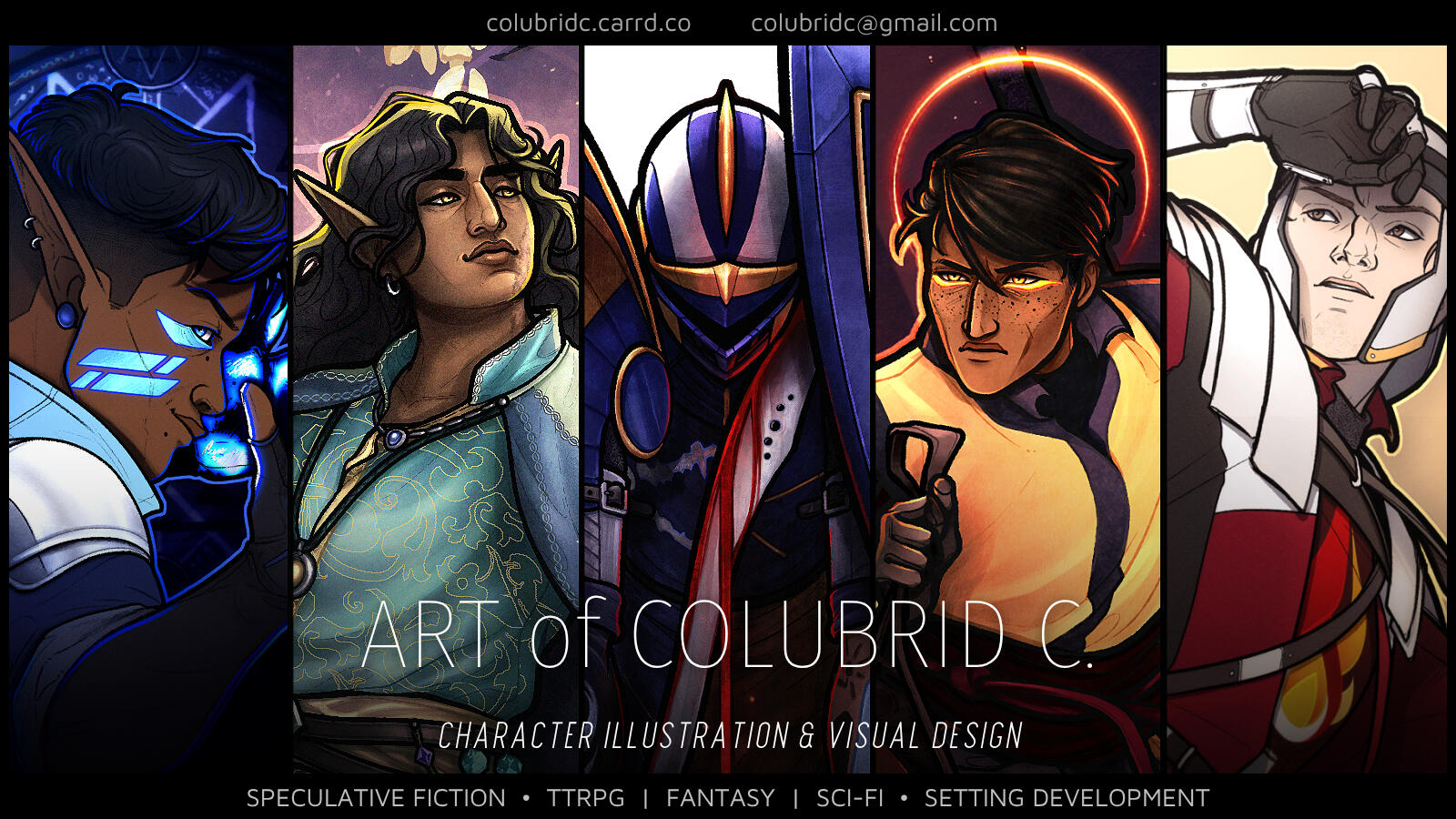
My name is Lucas, but I’m better known as “Colubrid”: a true jack-of-all-trades freelancer. But if you’re here, you’re probably more interested in hearing about who I am as an artist.I’m a queer, autistic artist with years of self-directed practice in speculative fiction, storytelling, and narrative-driven visual development, and definitely no formal training.Specifically, I’m a character-focused fantasy/sci-fi illustrator and designer. I’m most interested in the details that make a character feel like a unique person rather than a variation on a fantasy archetype — what all their little design decisions tell you about how they actually move through their world.Stylistically, I use strong linework, graphic shapes, and semi-realistic rendering. Ultimately though, the style is only there to serve the character. My work preserves a lot of information about who the character is at once: their body, age, expression, posture, equipment, clothing habits, social role, degree of polish or disrepair, how they occupy space, what parts of themselves they like or dislike — I never want to subordinate any of those aspects to aesthetics or convention. I’d rather communicate why something belongs in a design than make it elaborate, flashy, or dramatic for the sake of “illustration.”
What my art does:
It treats design as information rather than decoration — Clothing construction, armor, scars, body shape, hair, equipment choices, cultural cues, etc. aren’t interchangeable or visual noise. Every design aspect of a character looks the way it does for a reason.It preserves character identity — When I draw a character, I’m trying to figure out exactly who they are, then translate that identity into a visual medium. The entirety of a character can’t be represented through a single piece, but if someone sees the art and goes on to read the character’s description, every new detail should be met with “yeah, that makes perfect sense for how they look!”It takes the character more seriously than the spectacle — Even when there are magic effects, elaborate armor, dramatic lighting, etc., my art stays focused on the character at the center of it all. If the art is glamorous, if it’s dark and gloomy, if it’s intense and exaggerated, it’s because the character is.I care deeply about what I make, and I make it with intent. If you’re here to collaborate, you’re in good hands!
COMMISSION PROCESS & TERMS
How it works, what to expect, and placing your order
01 // General Scope & Art Style
02 // Characters & Subject Content
03 // Regarding Fan Art & Third-Party IP
04 // What I'll Need From You
05 // Gear & Visual Complexity Tiers
06 // Agreement & Authorization
07 // Submitting an Order Request
08 // How to Submit an Order
09 // Pricing & Surcharges
10 // Individual & Custom Quotes
11 // Payment Schedule
12 // Commercial & Monetized Use
13 // How It Works
14 // Updates & Progress Stages
15 // Revisions & Changes
16 // Turnaround & Timelines
17 // Inactivity
18 // Communication Guidelines
19 // Final Files
20 // Alternate Versions
21 // Editable & Source Files
22 // Personal Use Rights
23 // Privacy & Posting
24 // Process Verification
25 // Right to Decline or End a Project
26 // Scope Changes & Additional Work
27 // Client Cancellations
28 // Artist Cancellations
29 // Refunds
30 // Governing Documents
Click on any of the buttons above to jump to that section. Because of the length of the full terms, a summary is provided. You must read the SUMMARY OF TERMS before placing an order request.
SUMMARY OF TERMS
Submitting the commission order form is a request, not an automatic booking. I’ll review the project first to make sure it fits my scope, pricing, schedule, and licensing requirements. If I accept it, I’ll send a Commissioned Services Order (CSO), a Commissioned Services Agreement (CSA), a PayPal invoice, and access to your shared project folder. The project is officially booked once the required initial payment and any necessary references have been received.All prices are in USD and payments are handled through PayPal Invoice. Website prices are base prices; additional characters, complexity, design work, backgrounds, commercial licensing, alternate versions, or other project-specific additions may affect the final total. Every accepted commission receives an individual quote, and non-standard projects can be discussed by email for a custom quote. Any fees will be disclosed before you payPayment schedules depend on the total project price and will always be listed in your CSO. Final, full-resolution deliverables are not released until the project has been paid in full.Most commissions move through review stages such as sketch, line work, colors, rendering, and final adjustments. At applicable checkpoints, I’ll send an update and open a revision round. Earlier stages allow larger structural changes; later revisions are more limited because approved work has already been built on. Corrections to my own mistakes do not count as paid revisions.
Email is the official project record, though Discord is preferred for ordinary discussion and feedback. Any informal discussion that changes the price, scope, deliverables, licensing, or other project terms must also be confirmed by email. Each project also receives a shared Google Drive folder containing relevant documents, references, progress materials, and final deliverables. The folder remains available for 60 days after final delivery.Estimated turnaround is listed in the CSO, but estimates are not guaranteed deadlines unless I specifically agree to one. If I need a response before I can continue, extended inactivity may result in the project being paused; under the CSA, 14 days without a required response may trigger a pause and 30 days may be treated as abandonment unless we arranged otherwise.Unless otherwise agreed, finished artwork is licensed for personal, non-commercial use. Commercial or monetized use requires an appropriate license. I retain copyright unless a separate license or copyright assignment specifically says otherwise. I do not permit AI-training/image-generation use, NFTs, cryptocurrency, or blockchain-related use of the artwork.Clients may cancel after booking, with refunds determined by the project’s completion stage and the schedule listed in the CSO. If I cancel for reasons on my side rather than client breach or misconduct, refunds are handled separately under the CSA (but generally have 100% of the amount paid refunded to the client).
The full terms below explain the entire process, details, exceptions, and project-specific rules.
BEFORE YOU COMMISSION
01 // GENERAL SCOPE & ART STYLE
I primarily take character-focused commissions: original characters, TTRPG characters, and fantasy, sci-fi, or contemporary designs. Humans and humanoids are my usual, and I’m very comfortable with armor, weapons, uniforms, adventuring gear, and other character equipment.My usual scope includes:
• General original characters
• TTRPG, RP, novel, and video game characters
• Fantasy, sci-fi, and contemporary designs
• Original characters within an existing setting or franchiseI’ll generally pass on a project if it falls too far outside my range. I always appreciate someone’s interest in my work, but I’ve been doing this long enough to know when a project probably won’t mesh well with my workflow, strengths, or interests. I’d always rather tell you that upfront than take something on and realize halfway through that I’m the wrong artist for it.As a general rule, I won’t completely change my overall art style for a project. I can make certain aspects more or less detailed, adjust how heavily I render, or shift my usual compositional approach, but I can’t convincingly imitate a fundamentally different style. If you specifically want anime/manga, superhero-comic rendering, Magic: The Gathering-style card art, or another distinct visual style that isn’t represented in my work, I probably won’t be a good fit.That said, if there’s a specific look or finish within my own portfolio that you’d like me to aim toward, please point it out when you place an order! I can let you know whether it makes sense for the project you have in mind.
02 // CHARACTERS & SUBJECT CONTENT
I’m comfortable with a fairly broad range of humanoid characters. I’m also thrilled to work with characters who fall outside the usual “young, conventionally attractive medieval Europe fantasy adventurer” mold.Generally fine:
• Humans and humanoids
• Children, adults, and older/elderly characters
• Fantasy ancestries with mostly humanoid facial anatomy
• Horns, tails, scales, feathers, wings, and other non-human traits
• Armor, weapons, prosthetics, and mobility aids
• Scarring (with particular attention paid to the source/type of scarring)
• Injuries and less-detailed gore (blood, bruises, cutting injuries, missing limbs, etc.)
• Horses, birds, and dragons, depending on the piece or intentOutside my usual scope:
• Anthropomorphic mammals / mammalian muzzles
• Most animals in general
• Very animal-like fantasy characters (gnolls, werewolves, etc.)
• Highly mechanical bodies (robots, mecha, Transformer-style characters, etc.)
• Large crowd scenes, even if individual figures are low-detail
• Extensive or highly detailed gore (exposed innards/organs, anatomical detailing in injuries)ETHNIC FEATURES & NON-WHITE CULTURAL DESIGNSI’m very comfortable drawing characters of color, and I genuinely enjoy working with features, hair textures, clothing, armor, and visual traditions that fall outside the usual Western European fantasy default. I won’t whitewash a character’s features, and I’m equally uninterested in exaggerating or fetishizing them.I especially like designs that are culturally informed all the way through. If a character comes from a specific real-world or real-world-inspired background, I love to carry that into things like:• Facial features and hair
• Clothing silhouettes and construction
• Armor and protective gear
• Weapons and accessories
• Jewelry, ornament, and textiles
• Motifs, materials, and color choices“Inspired by the Tawantinsuyu / Inca Empire,” “ethnically Yoruba,” “similar to Trần-dynasty armor,” “they’re Ojibwe,” “influenced by Sámi clothing,” etc. gives me a lot to work with, especially if you have images or resources for me!I’m much more interested in drawing or helping to design characters that reflect their background than defaulting everyone to vague 16th-century Western European fantasy. Your setting doesn’t need to map directly onto a real-world culture, but “generic medieval” or “idk, Asian?” isn’t usually where I want to stop.BODY TYPES & BUILDSI’m comfortable drawing a fairly broad range of everyday and stylized body types, including thin, average, soft/chubby, athletic, and muscular builds. Very extreme proportions are outside my current strengths. This includes extremely low body fat or emaciated builds, very large/heavy body types, and highly exaggerated bodybuilding physiques.If a character’s body type is especially important to their design and you’re unsure whether they fall within my range, feel free to send a reference before ordering.BODY HORROR & UNUSUAL ANATOMYUsually fine:
• Extra or missing limbs, eyes, or other features
• Cybernetics and prosthetics
• Partial transformations, including plant, ghostly, undead, or magical changes
• Non-human anatomy when it still has a clear, intentional structure
• Multiple eyes when they make sense for the character or creature designUnlikely to be a good fit:
• Dense clusters of eyes or facial features
• Extensively distorted features (split mouths, “melting” eyes, extremely long limbs, etc.)
• Open torsos or body cavities, even when they aren’t technically gore
• Extreme transformation intended primarily to be grotesque or disturbingThese types of designs and concepts are hard for me to include/disclude as a general rule; I might need to see the actual concept before I can confirm whether it’s in my range or not.SEXUAL / NSFW CONTENTWhat I’m generally fine with:
• Shirtless or partially clothed characters
• Flirty/suggestive poses, expressions, or body language
• Non-sexual nudity
• Sensuality (more emotion focused)
• Kissing, hugging, or similar paired actionsWhat I’ll usually refuse:
• Explicit sexual activity
• Masturbation or other solo activity
• Fetish-focused content (even if it seems “SFW”)
• Erotic content and characters (e.g., “ahegao” expressions)
• Sexually gratifying artworkA shirtless character, flirty expressions, a romance-cover kind of pose, or a character deliberately trying to look attractive is all generally okay. Same with any type of non-sexual nudity, such as anatomy studies and neutral scenes where a character may be partially undressed (bathing or changing, for example). What I won’t draw is content designed primarily for a sexual purpose, such as erotic, sexually explicit, or fetish-focused work. If the main point of the piece is sexual or fetish content, even if there’s technically no nudity or sexual activity, it’s probably going to be outside what I offer.If you’re unsure whether your project is something I’ll take on, you can always email me before ordering!
03 // REGARDING FAN ART & THIRD-PARTY IP
Unfortunately, I don’t draw fan art. Original characters created within an existing setting or franchise are almost always welcome, such as characters made to fit into tabletop settings or adventure paths, games, books, film or TV universes, and similar such properties. The important factor is that the character and design are original to you, or that you otherwise have permission to commission artwork of them.A D&D GM commissioning art of their campaign’s NPCs or player characters is fine. NPCs are uniquely created characters even if they exist in an established Forgotten Realms setting. For player characters, even though the GM didn’t create them, they’ll (hopefully) have permission from the player to commission artwork of the character.Conversely, while there’s nothing wrong with something like OC × Canon ship art, paid artwork involving established characters can raise copyright issues I’d rather avoid entirely. Because of that, I don’t take commissions of canon characters from established IPs. That said, heavily redesigned, alternate-universe, or otherwise substantially reinterpreted versions of such characters might be considered. I would have to see the concept in order to determine whether I’d take on the project.Commercial licenses involving established intellectual property are a separate issue and may require permission from the relevant rights holder. Please email me before placing an order request if this may apply to your project.
04 // WHAT I'LL NEED FROM YOU
I like to consider myself easy to work with and welcoming to clients with little to no experience in commissioning artists. You don’t need to have a coherent pitch with dozens of references or perfect art-communication language; all I really need is enough information to understand who I’m drawing, what kind of piece you want, and which details matter to you.If all you have is a doodle, a scattered collection of inspiration references, and a vision, I’m happy to work with that. We’ll definitely need to talk more throughout the process, but my goal is to create a piece that meaningfully reflects your project. Similarly, you don’t need to know art terminology or have fully-formed ideas to communicate concepts or changes — “the shoulder looks weird” or “the clothes should be Crispy” are perfectly usable sentences for me.Usual references can include:
• Existing artwork
• Screenshots, face claims, or character creators/dollmakers
• Photos, collages, or mood boards
• Clothing, armor, weapon, or prop photos or drawings
• Rough sketches or doodles
• Written descriptions, backstories, or worldbuilding
• Character sheets or campaign notes
• Some disorganized pile of all of the abovePlease flag anything that’s genuinely non-negotiable! I often need to reinterpret details and make small changes to match the artwork to the vision, but I never want to do it at the expense of something critical to the character. If a scar has to be a particular shape, a weapon has a specific design, or a color absolutely can’t change, tell me. I promise you’re not being annoying or picky!REFERENCE INTERPRETATION & DESIGN WORKNot every artistic decision is a separate design service. Normal illustration work already heavily involves interpretation. Combining several references, adapting an existing outfit to a different body type, reconciling inconsistencies between images, interpreting written descriptions, or filling in small unspecified details are all part of the base commission.Separate design work comes in when I’m being asked to invent or create something that doesn’t already have a clear visual direction. If you are able to clearly communicate where references are inconsistent or inaccurate and can tell me what something should look like, you won’t be saddled with a design fee.Necessary design work might include:
• Building a character’s appearance from a loose concept with minimal details
• Designing an original costume or armor set from limited or significantly inconsistent references
• Developing or needing to separately draw insignias, emblems, or logos
• Designing weapons, accessories, or other major visual elements without visual references
• Substantially redesigning something rather than simply interpreting existing referencesIn the commission order form, there’s an option to mark whether your project will need design work. If you’re unsure, that’s okay! If I think your request needs it, I’ll tell you when I quote the project and we can discuss it. I’m not going to drop a fee on you halfway through the process because I never told you the references for the character’s armor were too unclear.WORKING FROM WRITTEN MATERIALVisual references are helpful, but they’re not required. I can work from prose, character bios, lore documents, campaign notes, manuscript excerpts, or mostly written descriptions. I can pull out the visual information that matters without needing you to rewrite everything into an “artist-friendly” format first.Written references can include things like:
• Physical appearance
• Clothing and equipment
• Cultural or setting context
• Personality cues
• Recurring imagery or motifsIf something important is unclear, I’ll ask. Otherwise, I’m comfortable making reasonable choices based on the material you’ve given me. Basically: if the information is already there, I can read it.
05 // GEAR & VISUAL COMPLEXITY TIERS
Complexity is based on how difficult the design is to construct, repeat, pose, and render, not how much of the body is covered, how dramatic the silhouette is, or whether the character wears armor; full pate, helmets, shields, and weapons can all fall under the normal base price.Surface detail can also affect complexity. Dense scales, individually defined feathers, fur patterns, quills, or other repeated body textures may increase the workload even when the character’s clothing or gear is simple.I price complexity based on how much additional drawing and rendering work the design actually creates. I’m also happy to simplify a design when the exact level of detail isn’t important to you. If a character has detail that would push the piece into a higher complexity tier, we can sometimes simplify those elements instead of adding the surcharge.Any complexity surcharge — or any proposed simplification to avoid one — will be discussed before you’re invoiced.COMPLEX — +20%
A design has a noticeable amount of extra construction or detail, but most of it is still relatively straightforward to understand and reproduce.• Several overlapping clothing or armor layers
• Moderate amounts of ornamentation, straps, or small accessories
• Multiple belts, pouches, or secondary equipment
• Decorative elements that need careful placement
• Armor with clear or simple forms but a moderate amount of embellishments
• Otherwise simple gear that becomes more difficult in certain poses or perspectivesHIGHLY COMPLEX — +30%
A substantial portion of the character requires careful construction, repeated detailing, or difficult translation from a 3D design into a specific pose.• Many interdependent armor, clothing, or equipment pieces
• Structured gear whose parts can’t simply “follow the body” in dynamic poses
• Dense ornamentation, embellishments, straps, braids, or chains, or other repeated small elements
• Multiple detailed accessories that all need to remain readable
• Complex layered silhouettes where overlap and perspective need careful planning
• Designs where foreshortening or a dynamic pose would significantly increase the workload
• Rendering that requires careful material separation across many surfacesEXTREMELY COMPLEX — +40%
This is for designs where the gear or costume itself becomes one of the main technical challenges of the illustration.• Dense detail across most of the visible character
• Large amounts of individually placed ornament, lacing, chains, engraving, embroidery, or mechanical parts
• Multiple detailed projecting structures that need to work correctly in perspective
• Intricate asymmetrical construction that can’t be mirrored or repeated easily
• Extensive surface detailing that must remain readable after rendering
• Designs that require substantial reverse-engineering or functional validation to draw properly
06 // AGREEMENT & AUTHORIZATION
The person placing the order needs to be legally able to enter into the Commissioned Services Agreement (CSA) and authorize payment for the artwork. If they’re under 18, a parent or guardian will need to agree to the CSA and authorize payment on their behalf. I don’t normally ask clients to prove they’re an adult (or that a guardian was involved) unless there’s a strong reason to believe the person placing the order may be underage.If you’re using someone else’s payment method, though, you’re responsible for making sure you actually have permission to do that.
07 // SUBMITTING AN ORDER REQUEST
The commission order form is a request, not an automatic booking. I’ll first review the form and make sure the scope, subject matter, and specifications are all within my range. If I have any questions or concerns about something you submitted, I’ll reach out via email for clarification.If I have enough information to accept your request without more clarification, I’ll send you an email confirming I’ve agreed to work on the project. Attached to that email will be a Commissioned Services Order (CSO) summarizing the project details and a Commissioned Services Agreement (CSA) outlining the terms and conditions of our working relationship.You’ll be able to review everything before paying anything. Once the required initial payment is made — thereby accepting the CSA — the project is officially booked!
ORDERING & PRICING
08 // HOW TO SUBMIT AN ORDER
All commission requests should start through my commission order request form. If the order form is unavailable for any reason, or if what you’re looking to commission doesn’t fit neatly into the options provided, please email me directly instead!The form is meant to give me enough information to understand what you want, determine whether the project is within my scope, identify anything that may affect pricing, and prepare the Commissioned Services Order if I accept the request. You do not need to have every single detail perfectly organized before submitting it, but please give me as much useful information as you reasonably can.At the beginning of the form, you’ll be asked for your name, email address, and PayPal information. Your name can be your legal name, username, or pseudonym; I primarily need something consistent to identify you across project documents and correspondence. The form also lets you identify whether you’re submitting multiple orders and, where applicable, connect a new request to an existing order number.From there, the form asks for the basic scope of the commission, including:
• Commission type, finish style, and figure size
• Number of characters
• A general concept or description of the piece
• Expression, mood, and overall direction
• Background preference
• Additional props, effects, or visual elements
• Any alternate versions you would like delivered with the finished artworkThe form then collects information about the character(s) being drawn. This includes appearance, personality, demeanor, clothing and gear, scale or height where relevant, signature colors, and any other information you think would help me understand the character. You’ll also be asked whether you already have visual references and whether the commission requires any character, costume, armor, weapon, insignia, or other design work.Reference files and external links are not submitted directly through the order form. After I review the request, I’ll contact you by email and you can send your reference material there. This also means you do not need to delay submitting the form just because you haven’t gathered every image into one place yet.The final portion of the form covers a few things that may affect whether or how I can take the project, including:
• Any third-party intellectual property involved
• Your intended use of the artwork
• Whether commercial or monetized use may be involved
• Any design work that may need to be added to the quote
• Anything else you think I should know before reviewing the requestIf commercial use is selected, the form asks for the general scope and a description of how and where the artwork will be used. This does not create a commercial license by itself; it gives me the information I need to determine what license may be appropriate and discuss the specific terms with you before the project is accepted.Token portrait orders use the same initial request form, but character information is collected separately. This keeps party or batch orders from turning the main form into forty-seven pages of repeated character questions. After submitting a token order, you’ll need to fill out a separate Character Information form for each character.AFTER SUBMITTING THE FORMSubmitting the form is a formal commission request, not an automatic booking. Once I receive it, I’ll review the scope, subject matter, character information, reference situation, design requirements, intended use, and anything else that may affect the project.At that point, one of three things will usually happen:
• I have enough information to accept the request as submitted
• I’m interested in the project, but need clarification or additional references before I can quote or accept it
• I determine that the project is outside my scope or otherwise not something I can take onIf I need more information, I’ll contact you by email. This might be something very simple like asking which armor reference should take priority, clarifying whether a background element is required, or confirming whether something you described would require separate design work.If I accept the commission, I’ll send you an email confirmation that includes:
• your Commissioned Services Order (CSO)
• the Commissioned Services Agreement (CSA)
• a copy of your PayPal invoice
• a link to the shared Google Drive folder for your project
• instructions for providing references or project materialThe Commissioned Services Order is the project-specific summary. It identifies what I’m actually being hired to make, the agreed project price, payment schedule, deliverables, revision schedule, estimated timeline, privacy status, refund schedule, licensing designation, and any other terms specific to that commission. Please review it before paying. If I misunderstood something, this is the point to tell me.You are not obligated to proceed just because I accepted the request and sent the paperwork.BOOKING THE PROJECTThe project becomes officially booked once I’ve received the required initial payment and any references or information I need before I can begin.Payment is the method used to accept the Commissioned Services Agreement, so please do not pay the invoice until you’ve actually reviewed the documents. Once everything required to begin is in place, I’ll add the project to my active schedule and we officially move into the commission process!
09 // PRICING & SURCHARGES
All prices are listed in USD. Payment is handled through PayPal Invoice unless we’ve specifically agreed to another arrangement in advance.The prices shown on my commission page are base prices for work that falls within the normal scope of that service. They’re intended to cover most commissions without requiring me to invent a custom rate for every piece.Some projects require enough additional work that a surcharge or separate fees may apply. Common examples include:
• Additional characters
• Complex gear, clothing, anatomy, or repeated surface detail
• Character, costume, armor, weapon, or other visual design work
• Backgrounds beyond what’s included in the selected service
• Commercial or monetized usage rights
• Requested alternate versions that require additional drawing or rendering
• Other project-specific additions outside the normal scope of the commission typeAny surcharge or additional fee will be identified before you pay. I won’t quietly add charges halfway through a project because I changed my mind about how difficult something was.Your final project price will be listed in the Commissioned Services Order and reflected on the PayPal invoice.
10 // INDIVIDUAL & CUSTOM QUOTES
Every accepted commission receives an individual quote, even when the request fits neatly into the standard options on my website. I’m also willing to consider commissions that don’t fit those options at all!If what you want falls outside the normal order form, involves an unusual deliverable, combines several services, or otherwise needs to be priced differently from my standard commission types, please email me before ordering. We can talk through what you’re looking for, what would actually be involved in making it, and whether it’s something I can reasonably take on. If it is, I’ll prepare a custom quote based on the specific project rather than trying to force it into a pricing category that doesn’t really fit.
11 // PAYMENT SCHEDULE
| Price | Schedule |
|---|---|
| Under $100 | 100% Upfront |
| $100 – $299 | 50% upfront / 50% before final delivery |
| $300 – $499 | 50% upfront / 25% after lines / 25% before final delivery |
| $500 – $999 | 30% upfront / 20% after lines / 20% after colors / 30% before final delivery |
| $1,000+ | custom installment schedule based on scope and expected length of the project |
Your exact payment schedule and dollar amounts will always be listed in the Commissioned Services Order before you pay anything. Work begins only after the required initial payment has been received. Later installments become due at the milestone identified in your Order, and I may pause work if a required payment is overdue.Final, full-resolution deliverables are not released until the project has been paid in full.If a project changes significantly after booking, any approved additional charges may be added to the existing invoice or billed separately depending on the situation. I’ll confirm the change with you before updating what you owe.I don’t accept payment through PayPal Friends & Family, gift payments, cryptocurrency, gift cards, checks you accidentally wrote for $4,000 too much, or other payment arrangements outside the invoice unless we’ve specifically discussed an alternative beforehand.
12 // COMMERCIAL & MONETIZED USE
The standard commission price includes personal, non-commercial use.If the artwork will be used to promote, support, or generate income, please tell me when ordering. Commercial and monetized uses require an appropriate license and may add a licensing surcharge to the project price.I offer the following usage licenses:
• Personal / Non-Commercial (default)
• Promotional / Indirect Commercial (+ 25%)
• Commercial Services (+ 50%)
• Limited Commercial (+ 100%)
• Expanded Commercial (+ 150%)
• Exclusive Commercial License (+ 200%)
• Copyright Assignment (+ 400%)The Commissioned Services Agreement contains the complete licensing terms for your project. If your planned use changes later, you can contact me about expanding the license rather than assuming the original permission covers it.If you’re unsure whether your intended use counts as commercial or monetized, email me before ordering. It’s much easier to sort that out beforehand than after you’ve already built the artwork into something.I don’t do “work made for hire,” and nothing in either the Commissioned Services Agreement or Master Services Agreement is meant to imply otherwise.
THE COMMISSION PROCESS
13 // HOW IT WORKS
Once the initial payment is received, I’ll begin the commission according to the scope and schedule listed in your Order.Before I start, I’ll make sure I have the references and project information I need. If anything important is missing or unclear, I’ll contact you before moving forward rather than guessing at something that could affect the final piece.Most projects move through several distinct stages rather than disappearing into a black hole until I email you a finished image two weeks later. The exact stages depend on the commission type, but a fully rendered illustration has key checkpoints: sketch, line work, flat colors, first-pass rendering, and final corrections.At each applicable review stage, I’ll send an update and open a revision round for you to provide changes, corrections, or feedback. Once that stage is approved, I’ll move on to the next.Once the piece is finished, I’ll send a final preview. Any remaining balance is due before the final, full-resolution deliverables are released.
14 // UPDATES & PROGRESS STAGES
Because different commission types need different checkpoints, the specific update and revision schedule for your project will be listed in the Commissioned Services Order.I might occasionally send additional progress images between formal checkpoints, especially if I want input on a decision. Those informal updates don’t necessarily create an additional revision round; they’re usually for feedback within an existing revision round, or for collaboration on a specific part of the piece.Updates are sent at the following stages:
• Sketch — composition, pose, proportions, major shapes, expression, and other structural decisions
• Lines — establishes the final drawing and more specific construction details
• Colors — establishes the palette, color relationships, patterns, markings, and usually the broad background treatment
• First Render Pass — develops lighting, volume, materials, surface treatment, and detailI also have a final-adjustments phase for small corrections and polish near the end of the process. You generally won’t receive this stage as a formal update, because at that point, the piece is basically complete. If I’m genuinely unsure about a final adjustment, though, I may still send it over for feedback.
15 // REVISIONS & CHANGES
Your Commissioned Services Order lists the revisions included at each stage of the project, but the general rule is simple: the earlier a change is requested, the easier it is to make.Sketch revisions are allowed major structural changes like:
• altering the pose, body position, or character appearance
• changing the overall composition or canvas dimensions
• revising major costume or design elements
• replacing or substantially altering gear or propsAs the project progresses, revisions become narrower because later work has been built on top of earlier approved decisions.Later revision stages are generally for things like:
• Small drawing corrections
• Color adjustments
• Minor proportion or placement changes
• Lighting and value adjustments
• Material or surface-treatment corrections
• Local rendering changes
• Missing little detailsRequests that require substantial work outside the included revision allowance may be quoted as an additional revision, but I will always be transparent about it and try to work with you.A requested change is different from an artist error. If I accurately followed the approved sketch and reference, but you later decide you’d prefer an entirely different sword, that may be an additional revision fee depending on when the request is made.Corrections to my own mistakes are not paid revisions.REVISION ROUNDS & FEESA revision round consists of one consolidated set of requested changes. If I don’t quite get one of those changes right the first time, asking me to adjust it again does not automatically count as a new revision round.A new round may apply if you start adding unrelated changes after the revision is already underway, substantially expand what you originally asked me to change, or keep revising the same element beyond a reasonable number of attempts.One consolidated major revision round is included at the sketch stage. Afterward, you will receive one minor revision round at each stage of the commission free of charge.Moderate or major changes requested after sketch approval may incur additional fees. After the completed artwork is presented and the included final minor revision round has been used, any further revisions will be charged according to the categories below.• $10 | MINOR
Does not require substantial redrawing or re-rendering.
→ Examples: adjusting colors, adding or removing a small accessory, slightly altering an expression or facial details, or making a small proportion adjustment.• $20–$40 | MODERATE
Requires part of the artwork to be redrawn or re-rendered but do not fundamentally alter the piece.
→ Examples: changing a hairstyle, replacing or adding a held object, changing one arm or hand position, significantly changing the expression, or revising a significant section of armor.• $50+ | MAJOR
Alters the approved direction, pose, composition, or overall design.
→ Examples: significantly changing the pose after sketch approval, replacing the outfit entirely, changing the character's body type or appearance, changing the camera angle/perspective, or substantially reworking a finished illustration.
16 // TURNAROUND & TIMELINES
Your Commissioned Services Order will include an estimated completion time based on the actual project. That estimate assumes reasonably timely feedback and no major changes to the scope. Time spent waiting for client responses is generally not counted as active working time.Estimates are just estimates, not deadlines. Art sometimes takes longer than expected, especially when a piece turns out to require more problem-solving than I anticipated. If something meaningfully affects the expected schedule, I’ll let you know.If you have a real deadline, tell me before ordering. I’ll only agree to one if I believe I can reasonably meet it. Rush orders or guaranteed quick turnaround times are not something I can offer.
17 // INACTIVITY
A short delay in responding isn’t a problem. Extended inactivity becomes an issue when I need information or approval before I can continue working. If I haven’t heard from you after a reasonable period, I’ll send a follow-up. Continued inactivity may result in the project being paused and moved out of its active place in my schedule.A project that has been inactive for an extended period may need to be rescheduled around work already booked by the time the client returns. I can’t indefinitely reserve active production time for a project I’m unable to work on.The formal inactivity, suspension, and termination provisions are contained in the Commissioned Services Agreement; per that agreement, I can pause a project after 14 days without a required response, and treat it as abandoned after 30 days of continued inactivity without prior arrangement.If you know in advance that you’ll be unavailable for a while, just tell me. Planned silence is much easier to work around than mysterious silence.
18 // COMMUNICATION GUIDELINES
I don’t expect instant replies, even if we’re talking over Discord. I keep very odd hours, so I may send emails or messages at times you might be unavailable, and you might respond when I’m unavailable. As long as you get back to me within a reasonable timeframe — usually a day or two — we’ll be okay.All I genuinely require is timely communication when the project reaches a review stage or when I ask a question about something that prevents me from continuing.When providing several changes at once, it helps enormously if you consolidate them into one email or message instead of sending them individually. If you think of something after your initial message, please send that too, but do your best to keep them together as much as possible.If you’re unhappy with something, please tell me! Regardless of what stage the project is at, I’d much rather know while I can still address it than find out after the project is finished that you were afraid to say anything. I won’t be offended or upset; I want to make a piece of art that you like.You’re always welcome to ask questions about the process, why I’m going with a certain direction, or other things relevant to the project. I may not be able to coherently explain it to you, but I’ll do my best to try. Likewise, I might need to ask you about your decisions, inspirations, reference choices, or whatever else. I don’t need perfectly formulated explanations, but I do need something to work with, even if it’s a bit rambly, short, or whatever else.COMMUNICATION METHODSEmail is the official record for the commission, but I prefer to use Discord for general conversation such as revision requests, feedback, reference sharing or discussion, design choices, questions, and ordinary back-and-forth. If you don’t use Discord, I’m also willing to use Bluesky or Reddit.Anything discussed through an informal instant messaging channel that changes the official project terms will still need to be confirmed by email. If we talk through Discord about adding another character, for example, I’ll send a follow up email outlining the discussion:“As discussed on Discord, adding another character would increase the project price by $___ and extend the estimated timeline by ___. Please reply to confirm that you’d like to make this change. Once confirmed, I’ll send an updated CSO and invoice reflecting it.”Until that confirmation happens, the existing Commissioned Services Order and Agreement remain unchanged.Documentation that must be sent or confirmed through email:
• Initial confirmation that I’ve accepted the request
• The Commissioned Services Agreement and Commissioned Services Order
• All amendments, addendums, or other changes to either document
• Changes to the agreed price, scope, deliverables, licensing, or other project terms
• Final deliverablesSHARED PROJECT FOLDEREach accepted commission will also receive a shared Google Drive project folder. This is where I’ll keep copies of the project documents and other materials that both of us need easy access to.Depending on the project, the folder may include:
• the Commissioned Services Agreement and Commissioned Services Order
• any amendments or addendums to those documents
• a PDF copy of your Google Forms commission order request
• a PDF copy of the PayPal invoice
• a sub-folder with client-provided references or supporting material
• uploaded images of progress updates
• a project status tracker
• all final deliverablesThe folder will remain available for 60 days after final delivery. After 60 days, I may clean out the shared folder and can’t guarantee that I’ll still have a copy of every file originally included in it for replacement or re-download. For business recordkeeping purposes, I’ll retain copies of contracts, service orders or statements of work, invoices, payment records, and other documentation for as long as reasonably necessary or legally required. However, those records are kept separately from the client-facing project folder and might not be easily re-sent.Please download and safely store anything you want to keep during that time.The folder is a file-sharing space, not the official communication channel. If something important is uploaded or changed there, I’ll still notify you directly rather than expecting you to notice it on your own.“TONE” AND CONDUCT• I may sound weird; don’t overread it.
• You may sound weird; I won’t overread it either.
• Let’s not be assholes to each other.I’m autistic, and my communication style can vary a lot depending on context, energy, and how much detail a conversation needs. I may be very direct, overly specific or technical, chatty, brief, or sound more blunt than I intend.Please don’t assume hostility or annoyance from tone alone. If something I say comes across strangely, you’re welcome to ask what I meant rather than trying to infer it, and I’ll give you the same courtesy. I’m not going to interpret a short reply, lack of emojis, direct feedback, or an awkwardly worded message as disrespect unless there’s an actual reason to.You don’t need to be cheerful, formal, or polished when talking to me. I do expect a reasonable amount of mutual respect, though. Disagreement, criticism, revision requests, frustration, or saying “I don’t like this” are all completely fine. Personal insults, harassment, discriminatory abuse, threats, deliberate hostility, sexual harassment, or repeated disrespect are not.If communication becomes abusive or makes it unreasonable for me to continue the working relationship, I may end the project under the applicable terms of the Commissioned Services Agreement.
DELIVERY & USAGE
19 // FINAL FILES
Final artwork is delivered digitally in the file format, dimensions, and resolution listed in your Commissioned Services Order, but unless otherwise specified, final illustrations are delivered as PNG files at 300 DPI. Printing and/or physical delivery is not a service I provide.I’ll send a watermarked final preview at a lower resolution before delivery. Once the artwork is approved and any remaining balance has been paid, I’ll provide the completed deliverables.Please download and safely store your files after delivery.
20 // ALTERNATE VERSIONS
You can request alternate exported versions in addition to the primary finished artwork. I’d prefer if you let me know you want alternate versions when filling out the order request form, but if you change your mind halfway through the process, I can probably accommodate it.No-cost alternate versions include:
• Transparent-backgrounds
• Token or avatar crops
• Versions without certain effects or graphic design elements
• Flat-color background alternativesAn alternate version is not a different illustration. Versions that require reworking the lines/colors/rendering, adding or changing specific background elements (not just removing it entirely or filling with a single color), significant costume changes, or other substantial new illustration work needs to be quoted separately.Any alternate versions included with your commission will be listed in the Commissioned Services Order.
21 // EDITABLE & SOURCE FILES
Editable working files such as .CLIP, .PSD, layered source files, or similar project files are not included by default.These files are working documents rather than polished deliverables. They can contain references, notes, clipping masks, abandoned versions, 800 adjustment layers, ugly color decisions made at 3:00 AM, or whatever else, and are often disorganized and messy.Having access to editable files also makes it far easier for someone to… well, edit the final product beyond what I’d approve as alterations to my work.If you genuinely need an editable file for a project, ask before ordering. Source-file delivery may involve an additional fee and different usage terms depending on what you need to do with it.I won’t provide editable files solely so that a client or third party can audit my artistic process.
22 // PERSONAL USE RIGHTS
Unless otherwise agreed, commissioned artwork is provided for personal, non-commercial use. Purchasing a commission does not automatically transfer copyright or unrestricted ownership of the artwork. Any commercial, monetized, exclusive, or expanded usage rights are handled separately under the applicable license terms.What you’re allowed to do with the artwork:
• crop the artwork for avatars, icons, tokens, banners, or similar personal use
• resize it for different platforms
• add simple text, borders, or layout elements around it
• post it to your personal social media, character pages, campaign pages, forums, or galleries
• print copies for yourself
• use it in private tabletop games, virtual tabletops, character sheets, campaign documents, or similar personal projects
• share it as a visual reference with other artists, writers, GMs, players, or collaboratorsPublic / online use should include credit to “Colubrid C.” or a link to my website where practical.What you’re NOT allowed to do with the artwork:
• claim the artwork as your own creation
• intentionally remove or obscure credit where it’s required
• sell or commercially distribute the artwork without the appropriate license
• substantially repaint, complete, or redraw the artwork AND share such versions publicly
• knowingly use it to train or develop generative-AI systems
• use the artwork in connection with NFTs, cryptocurrency, or blockchain products
23 // PRIVACY & POSTING
Clients can choose from several privacy options depending on how comfortable they are with the artwork or their identity being publicly associated with the project.The available privacy statuses are:
• Standard — I may display the artwork and identify or credit the client where appropriate.
• Identity-Private — I may display the artwork, but I won’t publicly identify or associate the client with it.
• Embargoed — I may display the artwork after an agreed date or event.
• Private — I won’t publicly display the artwork.Your selected privacy status will be recorded in the Commissioned Services Order.If a project involves information that genuinely needs to remain confidential beyond ordinary commission privacy, please tell me before ordering so we can determine whether additional terms are appropriate.
24 // PROCESS VERIFICATION
I do not use generative AI to create any part of my artwork, commissioned or otherwise.I understand why people want some reassurance about that, especially now. I’m happy to provide reasonable evidence when appropriate, such as unused sketches, work-in-progress images, screenshots of layers, or brief videos showing the piece open in my drawing application.Process verification does not include access to my editable source files, complete layer history, photographs or videos of my work space or device, or other private working materials.I also don’t provide screen recordings, including recordings made with Clip Studio Paint’s built-in recorder. Because of my tablet’s processing limitations, I often split larger projects across multiple working files, flatten or merge sections as I go, move elements between canvases, and combine everything again near the end. A recording from any one file would therefore be incomplete and could contain large jumps where work was completed elsewhere.The normal commission process already produces multiple stages of visible work; if you have a particular verification concern, you’re welcome to ask about it before ordering.
CANCELLATIONS & REFUNDS
25 // RIGHT TO DECLINE OR END A PROJECT
Submitting an order form does not guarantee that I’ll accept the project.I may decline work because of subject matter, scheduling, scope, technical requirements, licensing concerns, lack of confidence that I can execute the request well, or simply because I don’t think the project is a good fit for me.Once a project has begun, either party may also have circumstances that require the working relationship to end. The Commissioned Services Agreement explains the formal conditions and consequences of termination.I don’t take ending an accepted commission lightly. If I’m the one choosing to cancel a project for reasons that aren’t caused by client misconduct or breach, the client receives the refund required under the CSA.
26 // SCOPE CHANGES & ADDITIONAL WORK
The quoted price covers the project described in the accepted Commissioned Services Order.If you later want to add something that wasn’t part of that scope, I’m happy to discuss it. Examples might include adding another character, changing the requested background, creating an additional version, or expanding the intended usage rights.I’ll let you know whether the request can be incorporated into the current project and, if so, what additional cost or schedule change it would require. Nothing becomes billable additional work until we’ve agreed to it.Small clarification or correction requests are not automatically “scope changes.” This section is for actual additions or meaningful changes to what I was originally hired to make.
27 // CLIENT CANCELLATIONS
You may cancel a commission after booking if you no longer wish to continue.The refundable amount depends on how much of the project has already been completed. Rather than using a vague “refund at my discretion” policy, each Commissioned Services Order contains the cancellation schedule applicable to that specific commission type.As work progresses, a smaller portion of the project price remains refundable because more of the commissioned labor has already been performed.If you’re considering cancellation because something about the project isn’t working for you, you’re welcome to talk to me first. Depending on the problem, there may be a simpler solution than ending the commission entirely.
28 // ARTIST CANCELLATIONS
If I need to cancel an accepted commission for reasons on my side, I’ll tell you as soon as reasonably possible.When I cancel a project without client breach or misconduct, any money paid toward the unfinished commission will be refunded according to the artist-cancellation terms in the Commissioned Services Agreement.I won’t retain a client-cancellation fee simply because I’m the person who decided I can’t finish the work.Situations involving nonpayment, prolonged inactivity, abusive behavior, fraudulent payment activity, unauthorized use, or another material breach are handled separately under the CSA.
29 // REFUNDS
Your Commissioned Services Order shows the applicable refund percentage at each stage and, for clarity, calculates the actual dollar amount that would be retained and refunded based on both full payment and initial-payment-only scenarios. This means you don’t need to reverse-engineer a percentage table to know what a cancellation would mean financially. The numbers are provided before the project begins.Refund calculations are based on the agreed project price and the amount of work completed at the time of cancellation.
A refund cannot exceed the amount the client has actually paid.Once a commission has been completed, there is no remaining cancellation refund.Refunds required because I cancel the project are governed separately by the Commissioned Services Agreement, but are generally total refunds.
OTHER TERMS
30 // GOVERNING DOCUMENTS
This page is intended to explain my commission policies and ordering process in readable language. It is not a replacement for the project-specific documents you’ll receive before booking.Once I accept a commission, the working relationship is governed by the Commissioned Services Agreement and the Commissioned Services Order issued for that project. If something on this website conflicts with the executed CSA or an accepted CSO, the applicable agreement and Order control.The CSO records what we actually agreed to make: scope, price, deliverables, schedule, revisions, privacy status, licensing designation, and other project-specific terms. The CSA contains the formal legal terms that apply to the working relationship.For unusually large, complex, or ongoing projects, I may also use a Master Services Agreement (MSA) instead of the standard Commissioned Services Agreement. Clients who expect to commission substantial work, multiple related projects, or establish a longer-term working relationship are welcome to email me beforehand to discuss whether an MSA would make more sense.A Master Services Agreement establishes the general terms of an ongoing working relationship, while individual projects are then handled through separate project orders or Statements of Work. It’s usually unnecessary for a normal one-off commission, but it can make things much easier when we expect to work together repeatedly or on something significantly larger than my standard commission scope.If you have a question about these terms, the ordering process, or whether a particular project fits my services, you can email me before submitting an order. I’d much rather answer a question beforehand than have either of us make assumptions about something important!A template copy of the Commissioned Services Agreement v.1 can be found by clicking this link if you would like to read it before submitting an order request.
COMMISSIONS
Character Illustration, VTT Tokens, Design Work
STATUS
Open
TURNAROUND
Est. 2 weeks
PAYMENT
USD | Paypal
01 // ILLUSTRATION
SKETCH
$ 40 Half / $ 60 Full
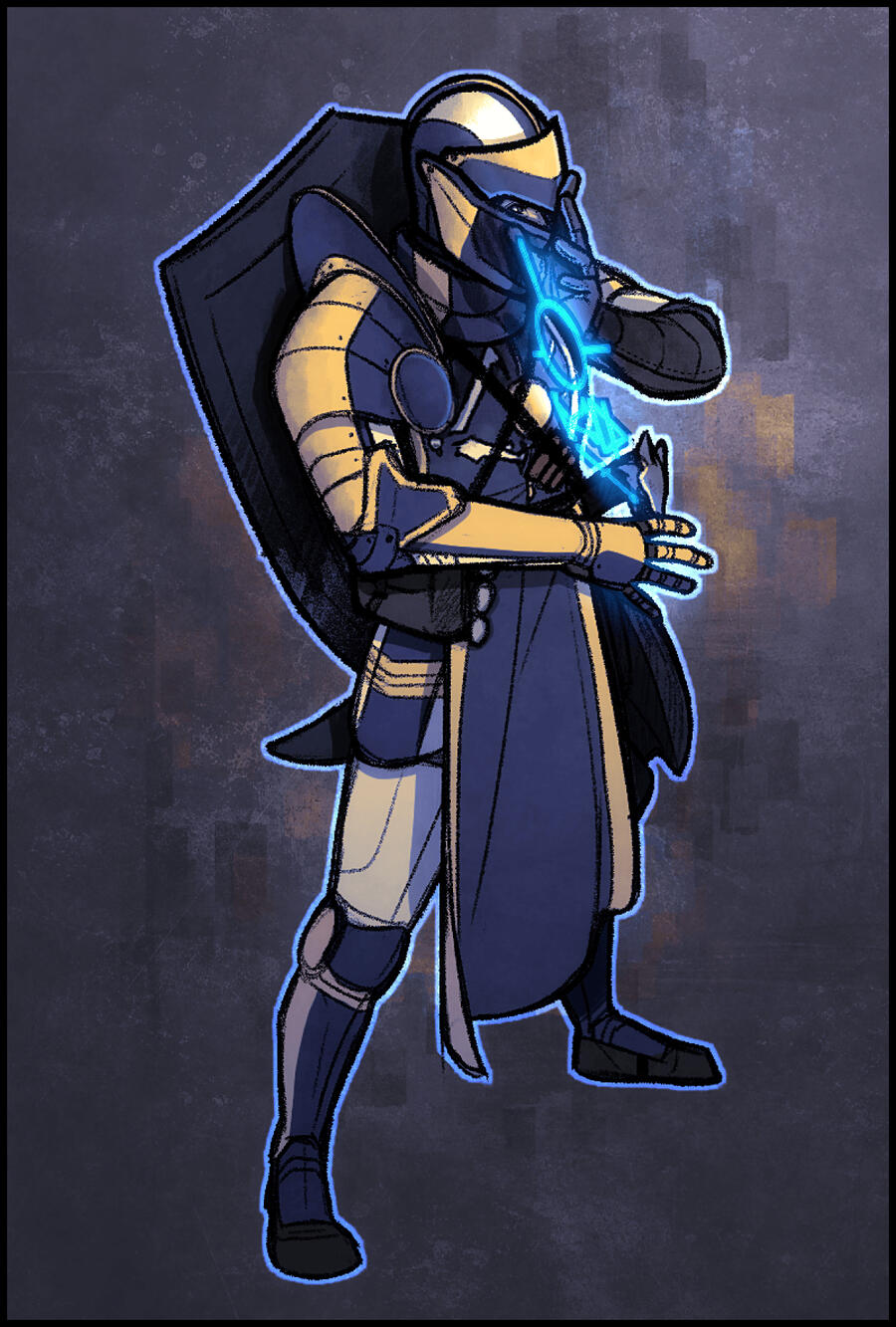
Loose Line Work | Limited Color Palettes
SIMPLE COLOR
$ 75 Half / $ 115 Full
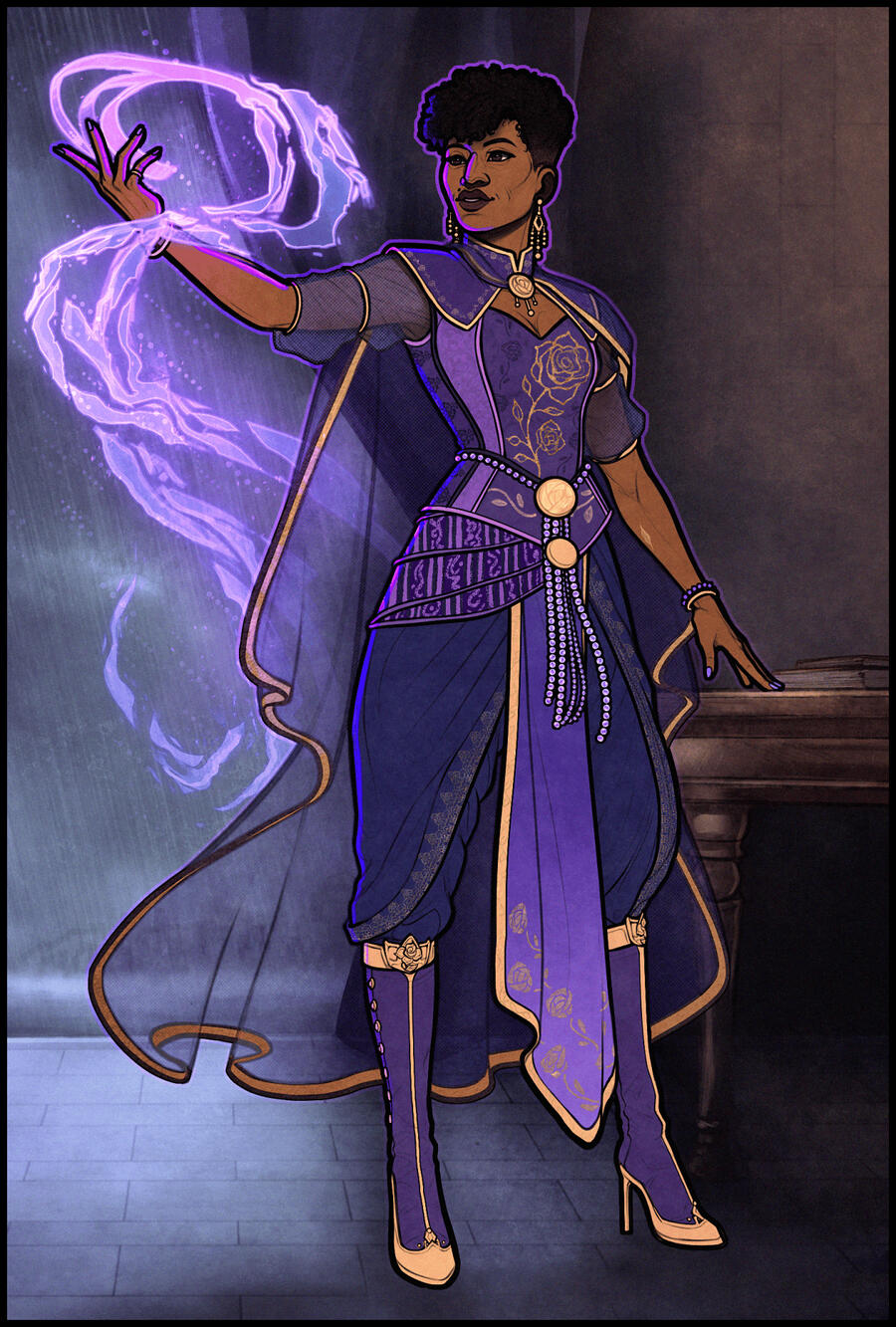
Clean Lines | Full Color | Minimal Shading
FULL RENDER
$ 140 Half / $ 190 Full
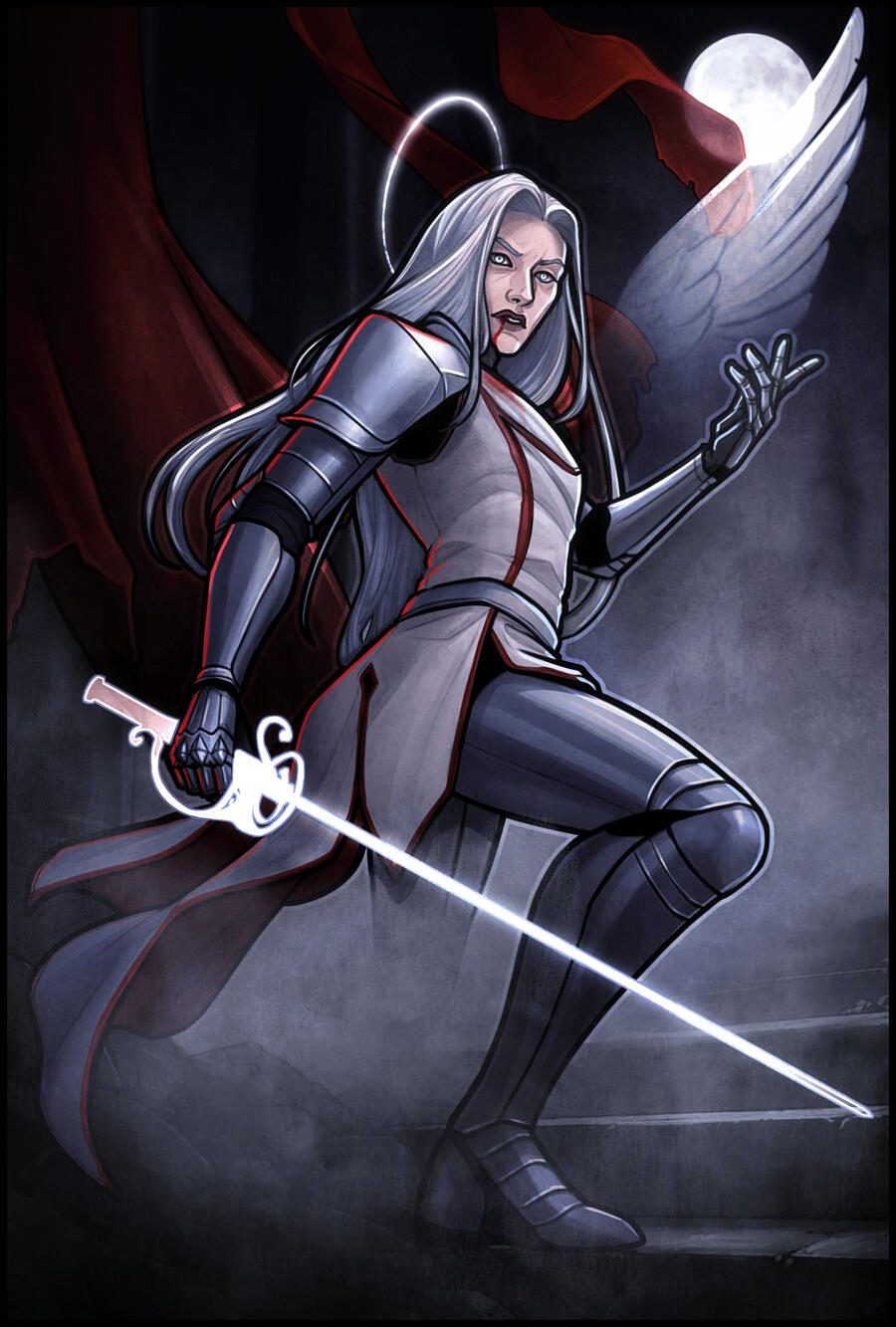
Detailed Rendering | "True" Illustration Feel
02 // TOKEN PORTRAITS
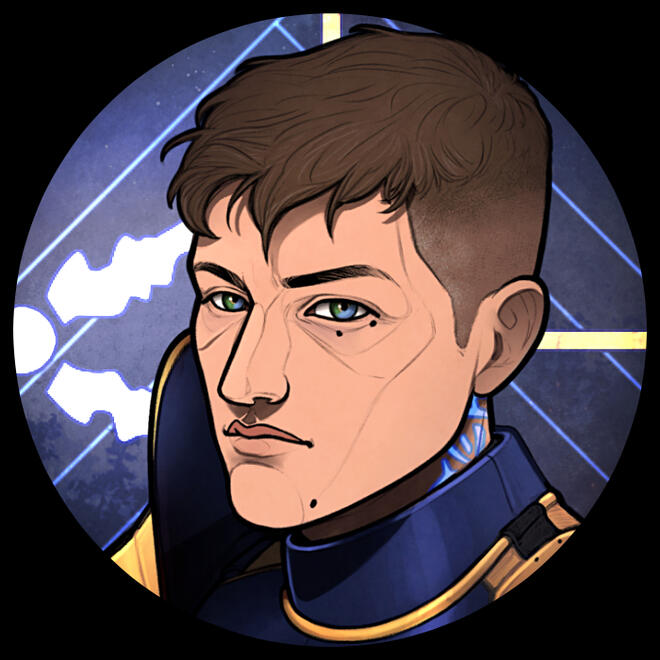
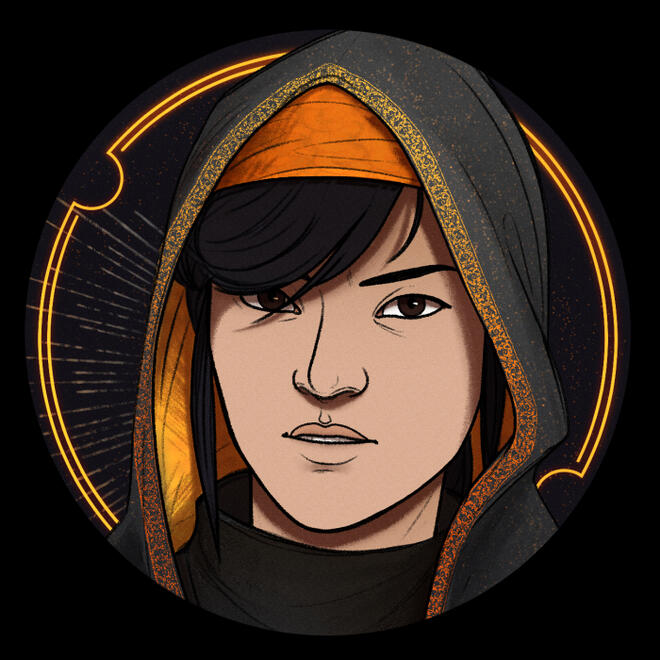
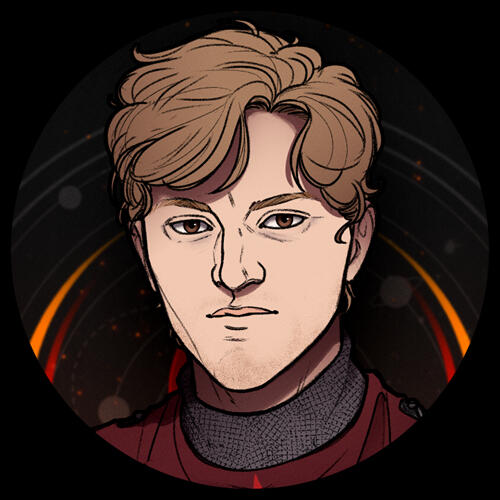
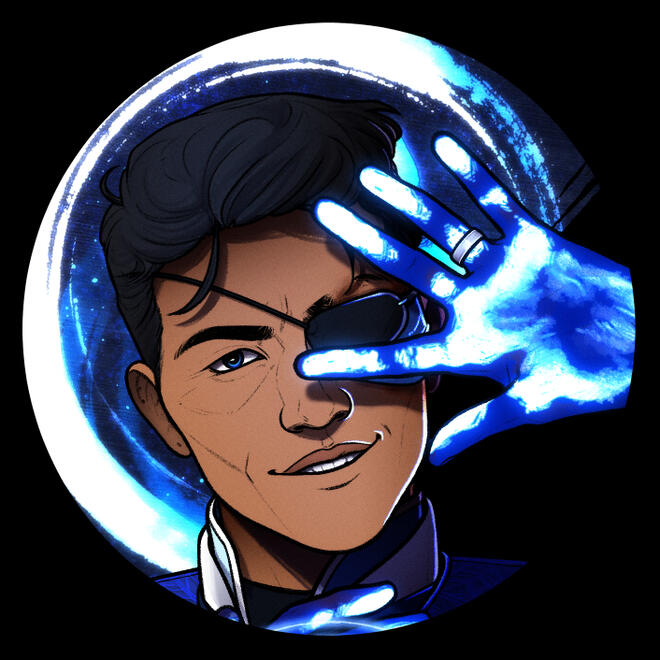
Collar-up portraits with thematic backgrounds and shading in key areas only.
Meant to be clearly readable at a small scale for use in VTTs.
Party orders must share a coordinated background theme to qualify for the group discount. You can choose the theme yourself or leave it to me; common backgrounds include faction symbols, class motifs, simple environments, or graphic patterns using each character’s colors.Client-provided backgrounds in group orders can be different between characters.
$ 40 | Single Token
700 × 700 px • PNG • 15 px frame border
PARTY DISCOUNT
$ 110 for 3
$ 145 for 4
$ 175 for 5
$ 30 each for 6+ Tokens
Providing a finished, ready-to-use background graphic reduces the price by $5 per token.Backgrounds must be of a high enough resolution for the token size and require little to no editing.
03 // OPTIONS & ADD-ONS
| + 75% | Additional Characters | Based on the original price of the corresponding character; added to the price of the commission's primary character. | |
| + 20% (+) | Complex Elements | For gear, clothing, and designs; applied according to detail and rendering difficulty. See the Terms for details on complexity tiers. | |
| Free | Alt. Export Versions | Transparent or flat-color backgrounds, token / avatar crops, effects / graphics removed. | |
| + $40 | Character Design | For characters needing an established appearance; focuses on facial features, color palettes, and overall impression. | |
| + $60 (+) | Costume / Gear Design | Original outfits, uniforms, armor, or adventuring gear developed around the character/faction, setting, and practical function. | |
| + $20 (+) | Iconography Design | Logos, emblems, insignias, or symbols developed for factions, organizations, characters, or settings. |
More information on Design Work can be found by clicking here!
ILLUSTRATION BACKGROUNDS
| + $15 | Simple Graphic / Scene | Minimal construction or detail; establishes scenery / atmospheric elements. | |
| + $40 | Developed Background | Recognizable environment with moderate depth, perspective, and rendering. Elements are not strongly defined. | |
| + $75 | Detailed Environment | Fully rendered setting with more defined background elements, depth, and environmental detail. |
Solid colors, gradients, simple patterns or basic graphics, and transparent backgrounds are FREE.
Backgrounds support composition and framing, establish setting, and reinforce the mood or tone of the piece. They are not intended as standalone environmental illustrations.
Developed and detailed backgrounds are available at my discretion.
COMMERCIAL LICENSING
| + 25% | Promotional / Indirect | Serves as advertisement or visual identity of a monetized project, channel, campaign, or brand. | |
| + 50% | Commercial Services | Appears as part of subscription-based or paywalled content, paid productions, or other revenue-generating efforts. | |
| + 100% | Limited Commercial | Included directly in a product, publication, game, module, or other item being sold or distributed commercially. |
Other licensing options are available. See the Commission Terms for more information.
... Or scroll for more information!
04 // FAQ
Do you use generative AI?
No. AI isn't used in any of my work and I have strict rules against using my art in any AI dataset or project.
Do I need a visual reference sheet?
No. Written descriptions, Picrews, Hero Forge or video game screenshots, moodboards, clothing references, rough sketches, previous artwork, and similar material are all fine.
Can you work only from written descriptions?
Yes. Novels, character bios, campaign notes, lore documents, and other text-heavy material are welcome. Unless the material is extremely sparse, it counts as enough reference to not tack on any design fees.
Can I commission fan art?
Sometimes. Original characters created from or inspired by an existing franchise are fine, such as fandom OCs and D&D characters. I don't accept commissions for unmodified canon characters from existing media. In short: I can draw your OC as a DBZ character; I can't draw Goku.
Do you draw NSFW?
Not really. I draw non-sexual nudity, but not erotic or sexually explicit content.
Do you offer refunds?
Yes, according to the stage the commission has reached. See the Commission Terms for more information.
How do payments work?
PayPal invoice exclusively; projects less than $100 are paid in full upfront, projects at or more than $100 are 50% upfront and before delivery.
What counts as design work?
"Design work" applies when I need to substantially develop major visual elements rather than interpret an already-established appearance.
What counts as complex gear?
Gear complexity is based on how much additional drawing and rendering work the equipment adds to the character. Complexity is assessed from the overall amount of additional work required, rather than by any single feature. I'll confirm the applicable tier before invoicing, and I'm happy to explain what is contributing to the classification if you're unsure.
Can I request changes?
Yes. Major changes to the project are easiest during the sketch stage, but you'll have the chance to make smaller changes throughout the process. I'd rather you ask for a change than be disappointed with the final piece!
Can I get the editable project file?
Not by default. Source files are separate production materials and are available with a separate agreement and associated surcharge.
What file type do I receive?
PNG at 300 DPI unless otherwise specified.
05 // WHAT TO EXPECT
The process cards included here show what I'm usually thinking about and refining at each stage. They're not meant to be a list of questions for you to answer, but knowing what I'm thinking might help you notice aspects that could use some adjustment to better match your vision.This example uses a token portrait, so it doesn't show everything I'd consider for a larger illustration. It's just a general idea of how I go from an initial concept to a finished piece.
Once I've reviewed your order form and confirmed I can take it on, I'll send a quote, a service agreement, and invoice. I might need to ask a few follow-up questions before sending those if anything seems unclear, but I'll be sure to let you know right away if I'm wanting to take on your project.I usually work in visible stages rather than disappearing until the end. Depending on the commission type, you may see a sketch, linework, color, and/or rendering stage before the piece is finished. These checkpoints are where I'll ask you to review the work and point out anything that needs changing before I move forward.Feedback doesn't need to be written in any type of terminology. "Vibes" can be more useful than trying to diagnose the drawing yourself — things like "the expression feels too severe," "the armor should look heavier," or "I think the shoulders should be broader?" are completely fine!Larger changes are easiest to make early. Sketch-stage feedback can include massive changes to pose, composition, proportions, outfit direction, and other structural choices. Once a stage has been approved and I've moved on, changes that require completed work to be redone may count as paid revisions.I'll handle small corrections to my own mistakes at no charge. If I miss something that was clearly established in your references or brief, or something looks off further along in the process that needs adjustment, those are corrections, not revisions.When the artwork is finished, you'll receive a watermarked preview for final review. After any remaining balance is paid, I'll send the full-resolution final files!Communication is generally low-pressure. I don't need instant replies, but quick feedback keeps the process moving! I'm usually willing to offer my Discord to clients so things can be sent, reviewed, and discussed. Quick messages tend to be easier than back-and-forth emails.


06 // DESIGN & CONCEPT WORK
If you know who your character is but not exactly what they look like yet, I can help develop the visual side of the concept before or alongside the final illustration. This can range from establishing an overall appearance from written material, to designing armor, outfits, weapons, symbols, or other setting-specific elements.
Design commissions begin with whatever you already have: written descriptions, mood boards, existing artwork, historical or fashion references, setting notes, screenshots, rough sketches, or even just a broad concept!Unlike large-scale visual development projects, I won't be presenting a large selection of options. Each design fee includes one proposed direction and one consolidated revision round during the design stage. Adjustments and refinement within that direction are included. If you would like multiple distinct concepts, alternate outfits, significantly different approaches, or broader exploratory development, I can quote that separately.
WORKING FROM WRITTEN MATERIAL
I love working from prose, character descriptions, setting notes, manuscript excerpts, and other written references.For novel characters, original settings, or other projects where the design exists mostly in text, I can work from the material you provide to identify the details that matter visually: physical description, clothing, cultural context, role, personality, recurring motifs, and other cues that help establish the character's appearance.If the written material leaves room for interpretation, I'll make reasonable choices based on the text and the direction you give me. If something is especially important or ambiguous, I'll ask for clarification before committing to it.You don't need to translate your prose into an organized "artist brief" before contacting me. If the information is already there, I promise can read it.
WHAT DOESN'T COUNT AS DESIGN WORK?
I don't charge a design fee just because your references are imperfect, incomplete, or come from multiple sources — normal interpretation and synthesis is already included in the illustration price.Combining several references into one coherent outfit, adapting clothing to a different body type, adjusting armor to fit a pose, reconciling small inconsistencies, or using written notes to fill in minor gaps are all part of ordinary illustration work.
$ 40 | CHARACTER APPEARANCE
This is generally for characters whose overall visual identity hasn't been established — when you have a loose description, personality, setting information, scattered references, or a general idea, but no coherent visual design in mind.I can help establish or refine things such as facial structure, distinguishing features, color relationships, visual motifs, and the overall impression the character should give.This is not a separate reference-sheet commission by default; it's visual development performed in preparation for the commissioned artwork!
$ 60 – $ 100 | COSTUME / ARMOR DESIGN
For original outfits, uniforms, armor sets, ceremonial clothing, adventuring gear, or substantial redesigns of existing references.Pricing depends on how much of the design must be invented and how structurally complex it is. A relatively simple outfit with an established aesthetic will fall toward the lower end, while layered armor, elaborate fantasy clothing, highly specific uniforms, or designs requiring extensive setting integration will fall toward the higher end.The design process may consider silhouette, layering, mobility, material, construction, cultural or organizational motifs, character role, setting, and how the clothing or armor would actually function on the body.Note: If you provide existing clothing or armor references and only need them adapted to your character, that's almost always part of the base illustration rather than a design commission!
$ 20 – $ 50 | OBJECTS & EMBLEMS
This category is for individual visual elements that need to be developed, such as: emblems, heraldry, logos, simple weapons, jewelry, accessories, insignia, isolated clothing pieces, magical focuses, or similar objects.Pricing largely depends on the complexity of the element, how much original development is required, and if you would like the element included as an additional drawn item (like a call-out or separate file). A straightforward pendant or simple insignia would typically fall toward the lower end; a more elaborate weapon, symbolic crest, or highly specific prop may fall toward the upper end.
PORTFOLIO
Character-Driven | Functional Designs | Graphic Clarity
I make character-focused illustration built around specificity, context, and intentional design. Faces, bodies, clothing, equipment, culture, posture, and small visual decisions all matter to me because they’re what make a character feel like themselves.My work uses strong linework, graphic clarity, and semi-realistic rendering, but I don’t treat every character the same. The illustration should answer to the character, not the other way around.
01 // CHARACTER ILLUSTRATIONS

Aeshma | "0. The Fool"
Original Tarot Series
Full Render, Full Body
Developed BG, Complex Design
($268)Seòras | "VII. The Chariot"
Original Tarot Series
Full Render, 2× Half Bodies
Developed BG
($285)Aloys | "XIII. Death"
Original Tarot Series
Full Render, Full Body
Detailed BG, Complex Design
($303)


Okami | Novel Character
Cursed Samurai Warrior
Full Render, Full Body
Minimal BG
($190)Seamus, Seòras | PF: SotE Campaign
Character Dynamic - Controlled Targeting
Full Render, 2× Full Bodies
Detailed BG
($407.50)Tristitia | Pathfinder Character
Angelic Dhampir
Full Render, Full Body
Developed BG
($230)


Ensign | Pokemon AU
Bug Gym Leader
Simple Color, Full Body
($115)Cyrus | Pokemon AU
Dragon Elite Four
Simple Color, Full Body
($115)
Karim | Pokemon AU
Electric Gym Leader
Simple Color, Full Body
($115)


02 // REFERENCE SHEETS

Seòras | PF: BL Campaign
Reference Sheet — Half-Celestial Mounted Fighter
Ensemble | Modern AU
Full Male Cast Line-Up
PF: SotE Campaign
Faction Design Comparison Sheet


03 // PORTRAITS

Camaya | PF: SotE Campaign
Desert Sniper Specialist
Simple Color, Complete Portrait
Simple BG ($75)
Aleve | PF: SotE Campaign
Apostate's Tiefling Form
Token Portrait
($40)
Ly Thao / Lee | PF: SotE Campaign
The Consortium's Psionic Magus
Simple Color, Complete Portrait
Simple BG ($75)


04 // SCENES & SKETCHES

"Fate" | PF: A&A Campaign
Summer Wars backstory scene
Sketch (No Color), 2× Half Bodies
Simple BG, 1× Complex ($78)
"Bad Game" | Modern AU
Vexriel at a lacrosse game
Sketch (No Color), 2× Half Bodies
Minimal BG ($45)
"Line Dance" | Modern AU
Seòrco on a date
Sketch, 2× Full Bodies
Minimal BG ($105)
"Joust" | PF: SotE Campaign
Seò & Calamity training
Sketch, 2× Full Bodies
Simple BG, 1× Highly Complex ($138)
"Vessels" | PF: BL Campaign
Seò & Charna sketches
Sketch (No Color), 2× Full Bodies, Minimal BG
($90 per full-body interaction)
"Chirping" | Hockey AU
Alaska Sockeyes nearing a bench penalty
Sketch (No Color), 3× Half Bodies
Minimal BG, 3× Complex ($105)


00 // PROCESS BREAKDOWNS

ADAPTING XIII. DEATH
The Rider–Waite–Smith Death card is less about “change” as metamorphosis than transformation through irreversible ending. Something cannot remain what it was; whatever continuity exists lies beyond the destruction of its former form.Waite depicts Death as unyielding rather than aggressive. The armored rider advances slowly through people of every age and social position; he carries no weapon, yet king, child, maiden, and clergyman are equally subject to him. Authority, status, age, innocence, and religious office may affect how someone encounters an ending, but none provide exemption.At the same time, Death contains life within itself. The rider carries a banner bearing a white rose that Waite explicitly identifies with life, while the distant “sun of immortality” sits behind a pair of pillars like a gate or threshold. By having Death’s rider carry the banner, the card therefore promises continuation beyond destruction, but not restoration: the old form ends, and necessarily, it cannot return as it was or continue to exist in the same state.Smith’s skeletal knight is a continuation of the card’s synthesis of contradictions. The rider is unmistakably dead and yet remains active, upright, and advancing. The rider becomes an impossible integration of two states: something simultaneously marked by death and still possessing the subjecthood that comes with life.If the rider were a living knight, he would carry intentions or motives of his own — the focus would shift to the rider as the subject who ends life. If the “rider” were instead a corpse lying on the ground, it would be the object to whom death happened. Smith’s rider, as a skeleton calmly riding through the scene, can’t fit either role. It’s not a victim of death, because it continues to act as a subject; it’s not an autonomous aggressor, because it is already the object. The contradiction makes the rider both subject and object: the evidence of death having happened and the active bearer of death still happening.The rider is therefore a heraldic embodiment of Death — an impossible body that continues to act, announcing and carrying forward into the world both the destruction that ended it and the life that persists through that destruction.
Aloys fits Death not because he is difficult to kill, or because violence colors every facet of his life, but because his character repeatedly follows XIII’s central structure: continuity and transformation through an irreversible ending. Aloys is repeatedly produced by circumstances outside of his control — each one consigns him to conditions that cannot be re-entered once lost. Identity and purpose may persist across that boundary, but the possibilities once available to them do not.XIII isn’t asking whether the subject remains categorically alive; it asks whether the form that ended remains recoverable. Aloys survives time and time again, but that survival does not restore the life that preceded the ending. He persists, but he is not restored; continuity remains, but return does not. This initially leaves Aloys only on the object side of Death’s subject–object contradiction. By enduring the endings that act upon him, however, he eventually becomes capable of occupying the role of subject. In this, Aloys approaches the rider itself: he does not merely survive irreversible endings, but comes to embody the force that carries them forward.Aloys as a revolutionary is significant because he does not aim merely to modify an existing system — he seeks to abolish the conditions that make its continued existence possible. He does not correspond to Death because he is a soldier who must kill people and cannot live with the consequences; rather, he uses the role forced upon him by exploitative, violent structures to irrevocably end them. Yet while Aloys succeeds in creating the peace he spent his life fighting for, he ultimately discovers that the identity capable of producing it could only exist under conditions the peace itself has ended. He becomes both the corpse and the man who killed it.Still, Aloys does not represent only inexorable endings; he embodies both aspects of Death. The endings that produced him remain visible, but the continuity that persists through them exists just as materially beyond him: in the people he protected and the ordinary future others can now inhabit. The rider’s destroyed body advances carrying an emblem of life — Aloys likewise carries life through destruction. The peace that eventually surrounds him does not negate the losses he endured any more than the white rose negates the skeleton holding it.Like Smith’s skeletal rider, Aloys bears evidence that his ordinary continuity should have ended, yet he carries forward both the destruction that rendered his former state irrecoverable and the life that persists through that destruction. He is the impossible herald of a continuity that exists through transformation, across the endings he both suffers and brings forth.